A Comprehensive Guide to Breathing for Indoor Cycling Beginners
Breathing techniques for indoor cycling beginners are often overlooked, yet they’re critical for success. As a certified nutritionist and fitness trainer, I have worked with hundreds of clients on their indoor cycling journeys. A surprising thing I have noticed is that most beginners focus intensely on their legs, resistance levels, and bike setup, but they completely ignore their breathing. This oversight often turns manageable rides on a stationary bike into gasping struggles and prevents riders from reaching their full potential.
Proper breathing techniques are the foundation of every successful ride. They are not just helpful, they are essential for maximizing your workout’s effectiveness and your overall enjoyment. Mastering this skill can transform your entire relationship with indoor cycling.
The Importance of Breathing for Indoor Cyclists
Breathing is much more than just taking in air. The way you breathe directly affects every aspect of your indoor cycling performance, from posture to energy levels.
How Breathing Impacts Your Ride
Your breathing pattern affects your posture on the spin bike. When you breathe correctly, your core muscles engage and support your lower back, preventing strain during long spinning sessions.
Poor breathing habits create a domino effect. Shallow chest breathing leads to muscle tension in your upper body, which can affect your hand positions on the handlebars and cause unnecessary strain. I once worked with a client who experienced constant shoulder pain during her indoor cycling classes. After we focused on her breathing, her discomfort vanished within three weeks.
Oxygen: Your Body’s Engine
Think of oxygen as the premium fuel for your body’s engine. Diaphragmatic breathing delivers more oxygen to your working muscles compared to chest breathing. This increased oxygen supply translates directly into better energy levels and endurance.
During aerobic exercise like indoor cycling, your muscles consume oxygen rapidly. Efficient breathing ensures a steady supply of fresh oxygen while effectively removing carbon dioxide. This process keeps your cardiovascular system running smoothly throughout your ride. More oxygen means better muscle function, reduced fatigue, and improved performance at all resistance levels.
The Difference Proper Breathing Makes
Proper breathing separates recreational riders from those who truly excel in their fitness journey. Beginners who master breathing techniques early on often progress faster than experienced riders with poor habits. When you get your breathing right:
- Longer sessions on the stationary bike become manageable instead of grueling.
- Your heart rate zones become more predictable and controllable.
- Recovery between high-intensity intervals (HIIT) improves dramatically.
- Mental focus sharpens, making indoor workouts more enjoyable.
Understanding the Basics of Breathing for Cycling
Before you can apply these techniques, it’s important to understand the different types of breathing and the muscles involved.
Diaphragmatic vs. Shallow Breathing
What Is Diaphragmatic Breathing?
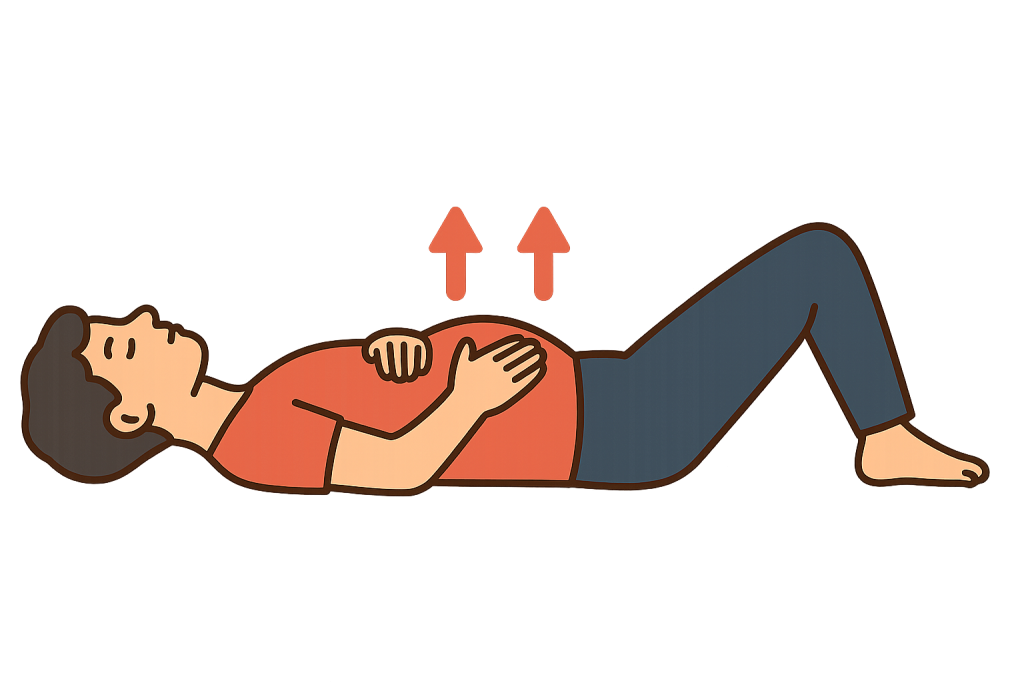
Diaphragmatic breathing, also known as belly breathing, uses your primary breathing muscle: the diaphragm. When you breathe this way, your abdomen expands on the inhale and contracts on the exhale. Your chest moves very little.
To practice, lie flat and place one hand on your chest and the other on your stomach. Breathe so that only the hand on your belly moves. Do not worry if it feels awkward at first; that’s normal when learning this fundamental skill.
The Benefit: Maximizing Oxygen Intake
Your diaphragm is designed to do the heavy lifting. When you engage it properly, you use your full lung capacity instead of just the upper portion. This can increase your oxygen intake by up to 40% compared to chest breathing. For indoor cyclists, this translates to better endurance, improved power output, and less fatigue during challenging segments.
The Problem with Shallow Chest Breathing
Shallow chest breathing uses only the top part of your lungs and relies on secondary muscles in your neck and shoulders. This creates unnecessary tension throughout your upper body during rides.
When you breathe shallowly, your breathing rate increases, creating a feeling of breathlessness even at moderate intensity. This becomes a major problem during steep climbs or high-intensity interval training.
The Cost: Wasted Energy and Decreased Performance
Chest breathing wastes energy that should be fueling your pedal strokes. The secondary breathing muscles were not designed for continuous heavy use and will fatigue quickly.
This rigidity also impacts your mental focus. When you’re fighting for air, concentration suffers. You lose awareness of your heart rate zones and overall ride strategy.
Your Body’s Airway: Key Muscles Involved

The Diaphragm: Your Primary Respiratory Muscle
The diaphragm is a dome-shaped muscle located below your lungs. When it contracts, it flattens downward, creating space for your lungs to expand. This downward movement naturally pushes your abdomen outward, hence the term belly breathing. For indoor cyclists, a strong, coordinated diaphragm is essential for sustained performance.
Secondary Muscles: When Your Diaphragm Needs a Hand
Your secondary breathing muscles include the intercostals between your ribs and the scalenes in your neck. These muscles assist during high-demand situations, but they should not be your primary drivers for breathing. They naturally engage during high-intensity intervals to meet increased oxygen demands. The problem arises when people rely on these muscles for regular, steady-pace breathing.
Essential Breathing Techniques for Your Ride
Here are actionable techniques to use before and during your indoor cycling workouts.
Before You Ride: Pre-Workout Breathing
Mindful Breathing
Spending five minutes on breathing preparation before mounting your spin bike can dramatically improve your session. This practice helps establish the mind-muscle connection needed for maintaining proper breathing throughout your ride.
- Start by sitting comfortably and focusing on your natural breath.
- Notice where you feel the breath most prominently.
This mindful approach also helps reduce pre-workout anxiety, especially if you’re attempting a challenging workout routine.
Simple Exercises to Practice
Here is a simple sequence for new cyclists:
- The Foundation: Sit tall with feet flat on the floor. Place one hand on your chest and one on your belly. Inhale for 4 counts, focusing on expanding only your belly. Exhale for 6 counts, gently drawing your navel toward your spine.
- The Cycling Simulation: Maintain the same hand position. Breathe in rhythm with an imaginary pedal stroke. Inhale for two slow counts, and exhale for two slow counts. Practice this for 2-3 minutes to establish muscle memory before you face the challenge of coordinating breathing with actual pedaling.
During Your Ride: Techniques for Every Scenario
Steady Pace Riding: The 2:2 Ratio
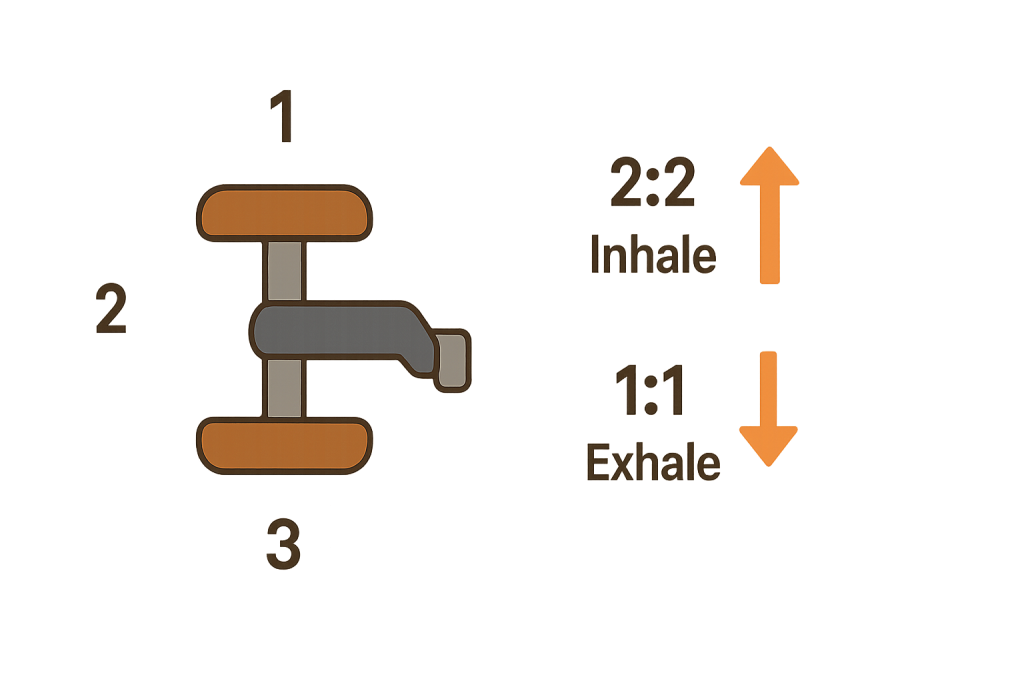
For moderate-intensity riding, use the 2:2 ratio: Inhale for two pedal strokes, then exhale for two pedal strokes. This pattern provides excellent rhythm and helps maintain consistent oxygen delivery.
- Start your ride at a comfortable resistance level.
- Focus on inhaling through your nose for two complete pedal rotations.
- Exhale through your mouth for the next two rotations.
I recommend practicing this ratio during your warm-up and returning to it whenever you need to establish control. It is particularly effective during long sessions where consistency is key.
High-Intensity Intervals (HIIT): The 1:1 Ratio
When you shift into high-intensity interval training, your oxygen demands increase rapidly. The 1:1 ratio, one breath per pedal stroke, helps meet these demands.
- During these intense segments, breathe through your mouth for maximum airflow.
- The key is to avoid holding your breath. Even when the effort feels overwhelming, maintain some rhythm.
Steep Climbs and Resistance: The Power Breath
During challenging climbs or high-resistance segments, coordinate your exhale with the power phase (the downward push of each pedal stroke). This technique, called the power breath, helps you generate more force while maintaining oxygen flow.
- Inhale during the recovery phase of your pedal stroke.
- Exhale forcefully as you push down.
This coordination engages your core and provides additional stability through your lower body during demanding segments.
Putting It All Together: From Theory to Practice
Common Mistakes to Avoid
- Holding Your Breath: This is the most frequent mistake I encounter, especially during challenging portions of indoor workouts. This approach backfires quickly, triggering your body’s stress response and leading to premature fatigue.
- Ignoring Your Body’s Signals: Your breathing rate provides valuable feedback about your effort and recovery. Rapid, shallow breathing indicates you have pushed beyond your current aerobic capacity.
- Forgetting to Practice: Proper breathing requires consistent practice. I suggest incorporating breathing awareness into every ride, not just when you are struggling.
Creating a Cycling Routine
- The Warm-Up: Begin each session with five minutes of easy pedaling on your stationary bike. Focus exclusively on establishing diaphragmatic breathing with the 2:2 ratio.
- The Cool-Down: The cool-down provides an excellent opportunity to practice breathing without the pressure of maintaining speed or resistance. Gradually slow your pedaling while extending your breathing cycles.
- The Long Haul: During long sessions, establish breathing check-ins every 10-15 minutes. Briefly assess your breathing pattern and make adjustments if needed. This prevents the gradual deterioration of technique as fatigue sets in.
Tools and Tips for Better Breathing
- Proper Form and Bike Setup: Your bike setup directly affects your breathing. When your seat is too low, your hip angle closes, restricting diaphragmatic breathing. Maintain relaxed shoulders and vary your hand position during longer rides to avoid restricting your chest cavity.
- Heart Rate Zones: Your heart rate zones provide excellent guidance for appropriate breathing patterns. In zones 1-2, focus on nose breathing with the 2:2 ratio. In zones 3-4, mouth breathing and the 1:1 ratio are typically required.
- Mindful Practice: Developing unconscious competence requires mindful practice over time. Use external cues to trigger breathing awareness. For example, every time you adjust resistance, check your breathing.
| Heart Rate Zone | Breathing Focus | Ratio |
|---|---|---|
| Zones 1-2 | Nose breathing | 2:2 |
| Zones 3-4 | Mouth breathing | 1:1 |
Your Journey to Becoming a Better Indoor Cyclist
Mastering breathing techniques unlocks capabilities you didn’t know you had. Clients are consistently surprised by their improved endurance and reduced fatigue once they implement proper breathing habits. These techniques scale with your fitness level. Whether you are a beginner on a basic turbo trainer or an advanced rider on a sophisticated spin bike, the principles remain the same.
Proper breathing affects much more than just oxygen delivery. It influences your mental focus, stress management, and overall enjoyment of indoor cycling. The strength benefits extend beyond your cardiovascular health. Proper breathing patterns support your core muscles and improve overall stability on the bike, which allows for better control at all resistance levels.
Your journey to better breathing starts with your next ride. Choose one technique from this guide and focus on it exclusively during your warm-up. Be patient with yourself, and remember that every expert was once a beginner who decided to pay attention to the fundamentals.