Does an Exercise Bike Tone Your Bum? The Truth for Women Over 50
You step off a curb you didn’t see coming. Your ankle wobbles, your hips catch you, and you keep walking like nothing happened.
Your glutes, the muscles of your bum and hips, were a big part of that save.
So when women ask me, “Does an exercise bike tone your bum?” I hear a bigger question underneath. Will this bike help me stay strong, steady, and on my feet for the next 30 years? Let’s walk through it.
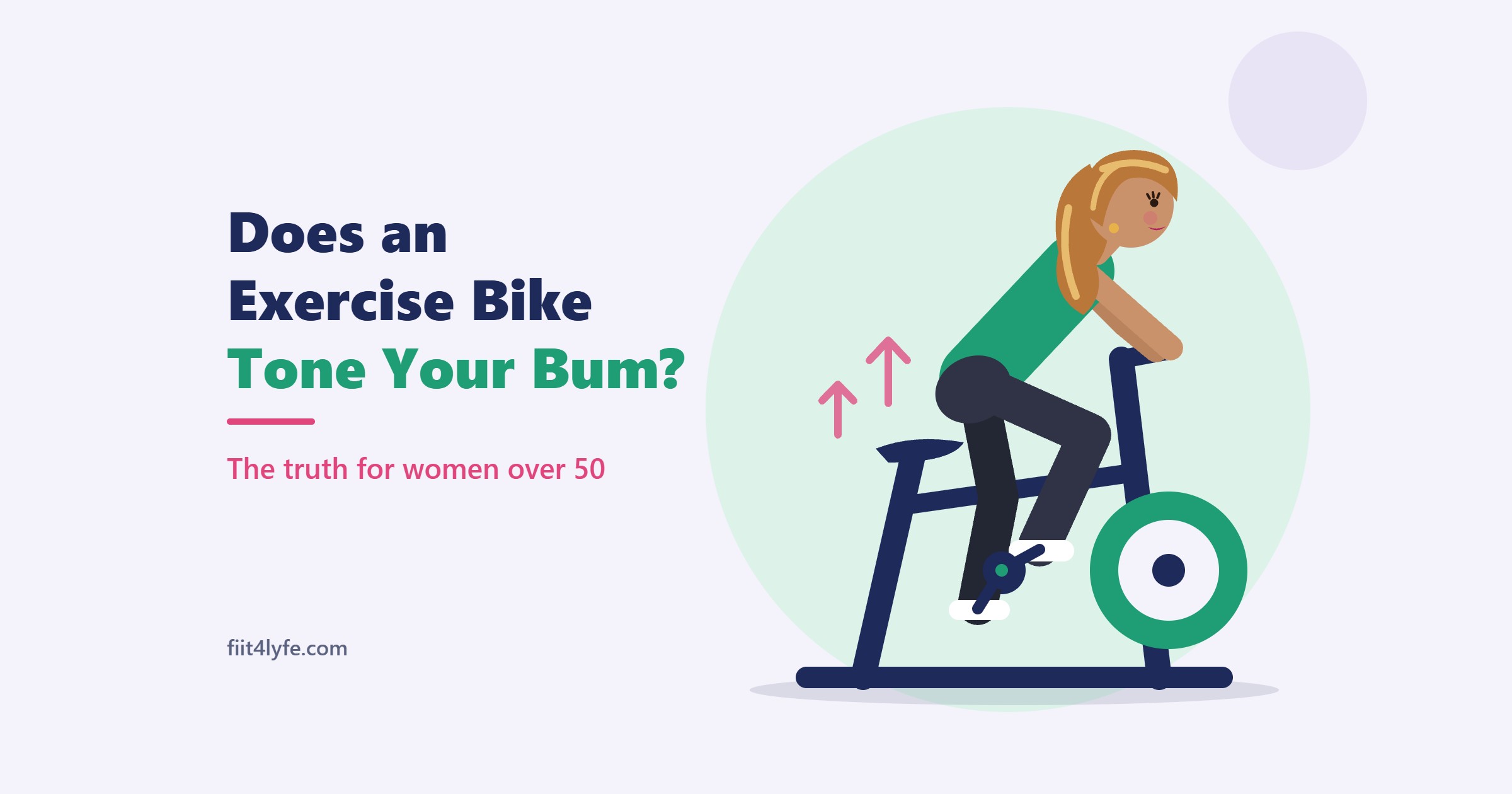
Yes, an exercise bike works your glutes, and it works them harder when you sit back in the saddle or stand up to climb. Cycling builds glute endurance more than glute size, so on its own it won’t make your bum noticeably bigger or flatter. After 50, pair your rides with strength work two or more days a week to keep the hip strength that protects your balance and your back.
Does an exercise bike tone your bum?
Yes. Your gluteus maximus, your biggest bum muscle, helps power the push down on every pedal stroke. Lab studies of cyclists found glute activity was higher and lasted longer when riders stood up to climb. Sitting farther back on the saddle also brings your glutes into the work, according to ISSA indoor cycling standards.
Here’s the simple version. On an easy seated spin, the front of your thighs does a lot of the work. Stand up for a climb, and your glutes step in to drive the pedal and hold your pelvis steady.
One honest caution. The key studies (Li and Caldwell, 1998; Duc and colleagues, 2008) tested small groups of 8 to 10 riders. Neither one included women over 50, so treat the findings as a guide, not a guarantee.
Will cycling make my bum bigger or flatter?
Usually not by much, especially if you already ride. Cycling is thousands of light repetitions, which mainly builds endurance, so your muscles keep going without tiring. Making a muscle noticeably bigger, called hypertrophy, takes heavier load. And the bike won’t take away the muscle you have.
What about the “flat bum” worry? In my view, a flatter backside after 50 has more to do with losing muscle overall than with cycling. A 2023 systematic review found that postmenopausal women had less muscle mass and strength than premenopausal women. That’s a strong reason to give your glutes some direct strength work.
Can cycling burn fat off my bum and thighs?
Not from one spot. When you exercise, your body draws on fat from all over, not just near the muscle that’s working. That idea, called spot reduction, doesn’t hold up in research. Cycling supports fat loss across your whole body, together with how you eat and how much you move each day.
In one 2013 study, young adults trained one leg for 12 weeks. Their body fat dropped overall, but not in the leg they trained. Your shape changes slowly and evenly. Keep riding, keep building, and let the whole picture shift.
Why do strong glutes matter more after 50?
Your glutes help hold your hips and pelvis steady every time you walk, climb stairs, or catch your balance. More than one in four adults 65 and older report a fall each year, and women report falls more often than men. Strong hips are one part of staying on your feet, and you build them long before 65.
This is longevity in real life. ISSA’s glute training standards connect weak or inactive glutes with knee pain, back pain, and poor stability. The U.S. Physical Activity Guidelines ask older adults to combine aerobic activity, muscle strengthening, and balance training. Your bike covers the first one. Your glutes need the other two.
How do I set up my ride to use more glute?
Start with saddle height. Your knee should keep a slight bend at the bottom of each pedal stroke, about 27 to 37 degrees by ISSA’s standard. Then sit back on the saddle and add resistance for seated climbs at 60 to 80 RPM (pedal turns per minute). Save standing climbs for when you feel steady.
Your Glute-Smart Ride Checklist
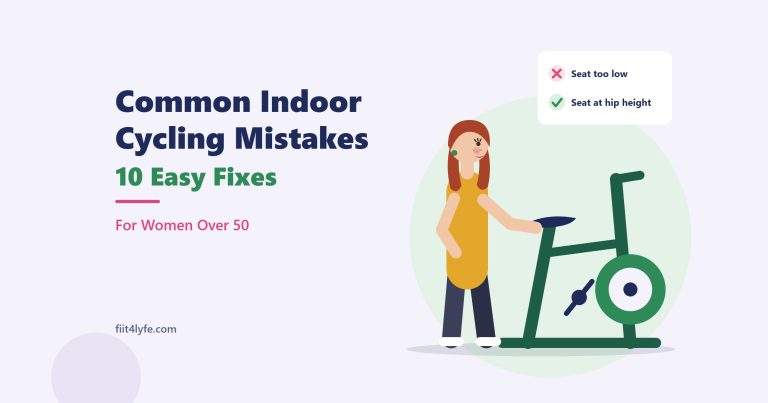
- Set the saddle at about hip height while you stand next to the bike.
- Do the heel test: leg straight, heel on the pedal, at the bottom of the stroke.
- Sit toward the back of the saddle when you climb.
- Add resistance until 60 to 80 RPM feels steady, not frantic.
- Keep your heel slightly higher than the ball of your foot. Don’t drop it.
- Add short standing climbs, hands on the bars, only when you feel steady.
Skip standing if your balance or knees say no. Seated climbs still put your glutes to work. If you’re new to the bike, start with my guide on how to start indoor cycling over 50, and check these common indoor cycling mistakes before your first climb.
What should I add off the bike for my glutes?
Strength work two or more days a week, which matches the U.S. guidelines for adults, including older adults. Start with glute moves: bridges, clamshells, side-lying leg lifts, step-ups, and sit-to-stands. Add a simple balance hold, like standing on one foot with a hand on a chair. Over time, build up to working all your major muscle groups.
Clamshells, step-ups, and single-leg bridges all appear on ISSA’s list of top glute exercises from lab testing. Pick one, learn it well, then add the next. For a full warm-up routine, see my glute activation exercises for cycling. Tight hips can hold your glutes back too, so my guide to hip flexor strength for cyclists is worth a read.
| The Myth | The Precision Standard |
|---|---|
| Spin harder to burn the fat off your bum | Fat loss happens all over, so build the habit and the muscle underneath |
| More classes mean bigger glutes | Strength days build what the bike can’t |
| Sit up front and pedal fast | Sitting back in the saddle brings your glutes into the work |
| Stand up the whole ride | Short standing climbs, only when you feel steady |
| Toning is about how it looks | After 50, glutes are about balance, your back, and staying independent |
This is where my 21-Day Fitness Acceleration Planner comes in. One of its goal-setting rules is to focus on just one or two areas at a time. So today’s Daily Win is simple: pick one glute move and do five minutes of it after your ride. Small steps matter.
Forensic Case File: The fall numbers every woman over 50 should see
Let’s look at the evidence. In a 2023 CDC report using 2020 data, 27.6 percent of U.S. adults 65 and older said they had fallen in the past year. That’s about 14 million people.
Women reported falling more often than men: 28.9 percent compared with 26.1 percent. The CDC says falls are not an inevitable part of aging, and its prevention advice includes exercises that make your legs stronger and improve your balance.
Here’s what that means if you’re 52 or 58 right now. Those numbers describe adults 65 and older, which is the future you’re training for today. The hip strength that keeps you steady then gets built now, one ride and one bridge at a time.
That’s not fear. That’s planning. You’re not behind, and you’re not too late.
Bottom line: An exercise bike works your glutes but won’t reshape them on its own. After 50, riding plus strength work two or more days a week builds the hip strength that protects your balance and independence.
Frequently Asked Questions
Does cycling make your butt bigger?
Usually not by much. Cycling builds endurance more than size. Growing your glutes takes heavier strength work, like weighted bridges or step-ups.
Does cycling make your bum flat?
No. Cycling doesn’t take muscle away. Losing muscle overall is the bigger concern after 50, and strength training helps protect against it.
Does a spin class build glutes?
A spin class works your glutes, especially during standing climbs. To build them, add strength training two or more days a week.
Can cycling reduce buttocks fat?
Cycling helps you lose fat across your whole body, but not from one spot. Your bum changes as your overall body fat changes.
Does a stationary bike work your glutes?
Yes. A stationary bike works your glutes with every push down, and more when you sit farther back on the saddle or stand to climb.
Does cycling tone your legs and thighs?
Cycling works your thighs, hips, and calves. For more on this, read my guide to indoor cycling for thigh toning.
Do you ride seated, standing, or both? Tell me in the comments.
For a new glute-friendly move every week, follow me @FiitTalk on Instagram and TikTok.
I’m a certified fitness professional, not a doctor, and this article is for general education, not medical advice. Please check with your doctor before starting any new exercise program, especially if you have hip, knee, or back pain, a recent injury, or another health condition.
Sources
- Li L, Caldwell GE. Muscle coordination in cycling: effect of surface incline and posture. Journal of Applied Physiology, 1998.
- Duc S, et al. Muscular activity during uphill cycling: effect of slope, posture, hand grip position and constrained bicycle lateral sways. Journal of Electromyography and Kinesiology, 2008.
- The role of estrogen in female skeletal muscle aging: a systematic review. Maturitas, 2023.
- Ramírez-Campillo R, et al. Regional fat changes induced by localized muscle endurance resistance training. Journal of Strength and Conditioning Research, 2013.
- Kakara R, et al. Nonfatal and fatal falls among adults aged 65 and older, United States, 2020-2021. MMWR, CDC, 2023.
- CDC. Older adult fall prevention.
- U.S. Department of Health and Human Services. Physical Activity Guidelines for Americans, 2nd edition, 2018.
- ISSA. Indoor Cycling course text; Foundations of Glute Training course text.