Indoor Cycling: Your Guide to a Fun, Full-Body Workout
As a certified nutritionist and fitness trainer, I’ve discovered easy indoor cycling routines that make indoor cycling a fascinating full-body workout. Many people think it’s just about spinning a wheel and getting sweaty. They can’t be more wrong.
I’ve seen firsthand why indoor cycling has become such a powerful tool for fitness. The most effective workouts are those that combine efficiency with sustainability, and indoor cycling delivers on both fronts.
What Is Indoor Cycling?
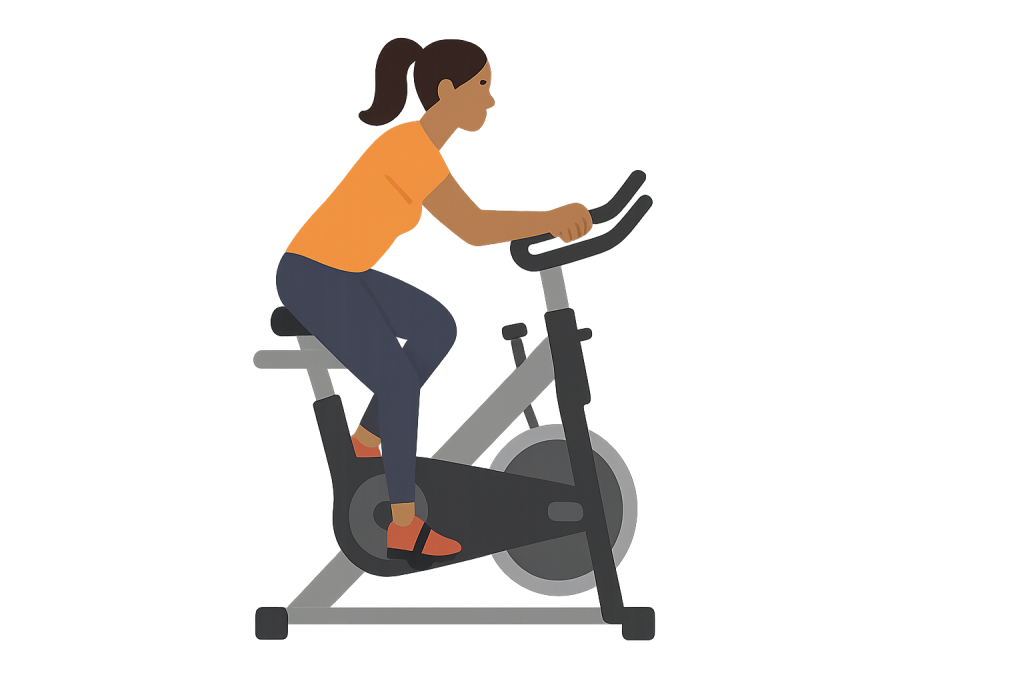
Stationary cycling involves riding a stationary bike in a controlled environment. Unlike outdoor rides, you control every variable. The weather can’t derail your plans, traffic isn’t a concern, and you can focus entirely on your workout and personal goals.
Indoor cycling is a great way to combine cardiovascular conditioning with strength building in a low-impact format. Your heart rate climbs, your muscles work against resistance, and your entire body engages to maintain proper form and power. People often burn between 400 and 600 calories in a single 45-minute session, depending on their effort level.
Stationary vs. Smart Bikes
Traditional stationary bikes have a heavy flywheel, adjustable resistance, and basic metrics. These work well for general fitness and home workouts. An indoor trainer or smart bike connects to apps and provides real-time data on power output, cadence, and heart rate. Some even have erg mode, which automatically adjusts resistance to maintain specific power targets.
Starting with Any Fitness Level
One thing I’ve consistently seen in my fitness practice is that effective workouts meet you where you are. Your current fitness level simply becomes your good starting point, not a limitation. The bike responds to the effort you’re willing to put in.
The Top 5 Benefits of Indoor Cycling
The benefits of indoor workouts extend far beyond what most people expect from an exercise bike.
1. Boost Your Cardiovascular Health
Indoor cycling workouts are phenomenal for cardiovascular conditioning. Heart rate improvements are often the first benefits people notice from consistent exercise.
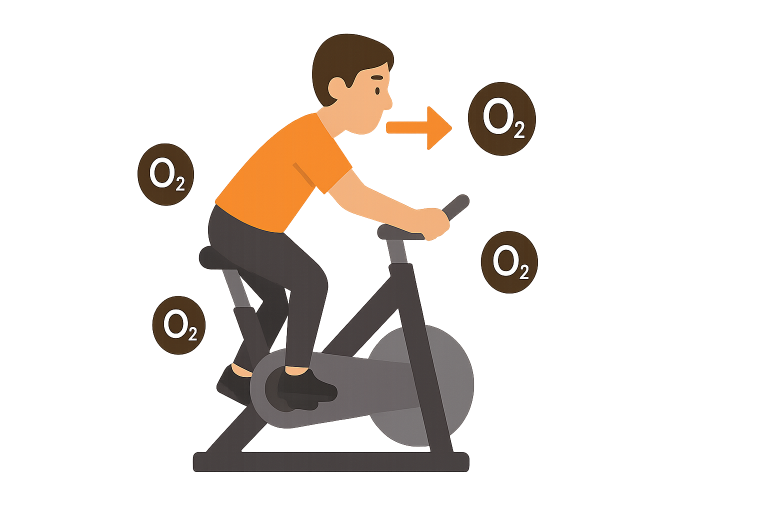
A typical indoor cycling session helps train your heart in multiple ways. Low-to-moderate intensity efforts build your aerobic base (Zone 2), which improves your body’s efficiency at using oxygen. During high-intensity intervals, your heart rate climbs into higher zones, strengthening your heart muscle and improving your ability to push harder and recover faster. The sustained aerobic activity can also help reduce blood pressure and improve cholesterol levels. The cardiovascular benefits are well-documented.
2. Get Full-Body Fitness
Indoor cycling engages much more than just your lower body. When performed correctly, it’s a true full-body exercise. Your core works continuously to maintain posture and generate efficient power.
During the pedal stroke, your glutes and hamstrings are heavily engaged as you drive your hips and pull up on the pedals, while your quadriceps are responsible for the downward push. Different hand positions on the handlebars engage your shoulders and upper body. In a standing position on the bike, your upper body becomes heavily involved as you pull against the handlebars while driving power through your leg muscles.
3. Manage Your Weight
From a nutrition and fitness perspective, successful weight management requires creating a sustainable caloric deficit. Indoor cycling supports weight loss goals by burning significant calories.
The high intensity intervals possible with this exercise are an excellent way to aid in weight management. These intense efforts create a substantial “afterburn effect,” or EPOC (Excess Post-exercise Oxygen Consumption), which means your body continues to burn calories at a higher rate for a short time after the workout is over. The resistance work also helps preserve lean muscle mass during weight loss, which keeps your metabolism higher than cardio-only approaches.
4. Be Gentle on Your Joints
Having worked with people across various fitness activities, I’ve learned that joint-friendly exercise options are crucial. The smooth, circular motion of pedaling eliminates the jarring impact on knees, hips, and ankles. This makes it a great option for all ages to achieve cardiovascular benefits without joint stress. Indoor cycling allows for a challenging workout intensity without the risk of impact-related injuries.
5. Boost Your Mental Well-being
Regular exercise triggers the release of endorphins and other mood-regulating chemicals. Clients who maintain a consistent indoor cycling training plan often report improved energy levels, mood, and sleep quality. The discipline and mental toughness developed through harder interval sessions can positively impact other areas of life, from work to personal challenges.
Getting Started: Equipment & Setup
Choosing Your Indoor Bike
When choosing between upright and recumbent bikes, consider your specific needs. Upright bikes position you similarly to outdoor riding and engage your core more actively. Recumbent bikes offer back support and are excellent for people with lower back concerns.
You also have a choice between two main types of indoor trainers:
- Wheel-on Trainers: These are typically more affordable. You simply attach your bike’s rear wheel to the trainer. The main downsides are tire wear and a slightly less realistic road feel.
- Direct-Drive Smart Trainers: These are more expensive but offer superior performance. You remove your bike’s rear wheel and mount the bike directly onto the trainer’s cassette. This provides a more realistic ride feel, quieter operation, and more accurate power measurement.
What to Look for in a Home Indoor Trainer
Look for bikes with smooth, adjustable resistance systems and a stable frame. A trainer workout should feel secure. Ensure the bike has adequate adjustability for seat height and position. While not essential for beginners, access to basic metrics like heart rate can help track progress.
Proper Bike Setup
Getting the fit right is crucial for comfort and power. A proper bike fit can prevent injury and maximize your workout efficiency.
A Quick Bike Fit Checklist:
| Aspect | Description |
|---|---|
| Seat Height | When your pedal is at the bottom of its stroke, your leg should have a slight bend at the knee (about 25-30 degrees). |
| Saddle Fore-Aft | Place the pedals in the horizontal position. The front of your knee should be in a straight vertical line with the center of the pedal. |
| Handlebar Height | For beginners, handlebars should be at or slightly above seat height to promote comfortable posture that doesn’t strain your back or neck. |
The Ultimate Indoor Cycling Workout Plan
The Warm-Up
A proper warm up gradually increases your heart rate and prepares your muscles for more intense efforts. I learned the importance of this step the hard way in my early training sessions.
A 10-Minute Warmup Protocol: Start with light resistance and easy spinning for 3 minutes. Gradually increase to moderate resistance for 3 minutes. Add two 30-second intervals with light resistance increases, then establish your working cadence for the final 2 minutes.
Structured Workouts
Workout variety prevents boredom and targets different fitness adaptations.
| Week | Workout 1 | Workout 2 | Workout 3 |
|---|---|---|---|
| Week 1: Building a Foundation | Easy Endurance: 20-minute ride at steady, moderate pace. Focus on comfortable breathing and smooth pedal strokes. | Intro to Intervals: 25-minute workout. After warm-up, 3 rounds of (1 min hard effort, 2 min easy recovery). | Active Recovery: 15-minute easy spin at light resistance. Helps with muscle soreness. |
| Week 2: Improving Stamina | Longer Endurance: 30-minute ride at steady pace. | Adding Intensity: 30-minute workout. After warm-up, 4 rounds of (1 min hard effort, 2 min easy recovery). | Recovery: 20-minute easy spin. |
| Week 3: Finding Your Pace | Endurance: 40-minute ride at steady pace. | HIIT Focus: 30-minute workout. After warm-up, 5 rounds of (45 sec hard effort, 90 sec easy recovery). | Recovery: 20-minute easy spin. |
| Week 4: The Final Push | Longest Ride: 45-minute ride at steady pace. | Final HIIT: 35-minute workout. After warm-up, 6 rounds of (1 min hard effort, 90 sec easy recovery). | Recovery: 20-minute easy spin. |
The Cool-Down
After your workout, spend 5 to 10 minutes of easy spinning recovery at a very light resistance. This helps your heart rate and breathing return to normal and reduces post-workout stiffness.
Advanced Techniques and Terms
As you progress, understanding key concepts will help you train more effectively.
Key Metrics: Heart Rate & Power Output
Heart rate tells you cardiovascular effort, while power output measures the actual work you produce. A simple way to measure your power is to do a CTS Field Test. The CTS field test power is an excellent way to establish training zones and train with purpose.
Advanced Training Programs
Once you have a solid fitness base, you can incorporate more sophisticated training programs.
- Lactate Threshold Workouts: These target the point between aerobic and anaerobic training. Sweet spot workouts are an excellent example, as they improve sustainable power without excessive fatigue. They are typically performed at around 88-94% of your FTP.
- Max Intervals: These high-intensity workouts push your power output to its highest sustainable level. They are often a max effort for a short duration and should feel very hard. These efforts will push you to become a better cyclist.
The Best Ways to Train
Indoor cycling offers many of the best ways to train. It’s an excellent way to maintain fitness during the winter months, regardless of weather. The consistency of indoor rides from the comfort of your own home creates a compound effect, so you’re ready for outdoor rides in the spring.
Indoor Cycling Classes vs. Home Workouts
Many of my clients combine home workouts with occasional indoor cycling classes for motivation and variety. Group rides in a studio can provide a motivating energy that pushes you to work even harder.
Conclusion
I’ve seen firsthand how this form of exercise can meet people where they are and help them reach their goals. The best workout is the one you will actually do consistently, and indoor cycling provides the perfect combination of effectiveness, convenience, and enjoyment to create lasting positive changes in your life.
Tools