How to Breathe While Cycling: A Simple Guide for Women Over 50
Two songs into a climb, you notice you’re gripping the handlebars, your shoulders are up by your ears, and you haven’t let a breath out in a while. Your face is hot. Your legs aren’t the problem. Your breathing is.
Learning how to breathe while cycling is simpler than most classes make it sound. Here’s what actually matters after 50.
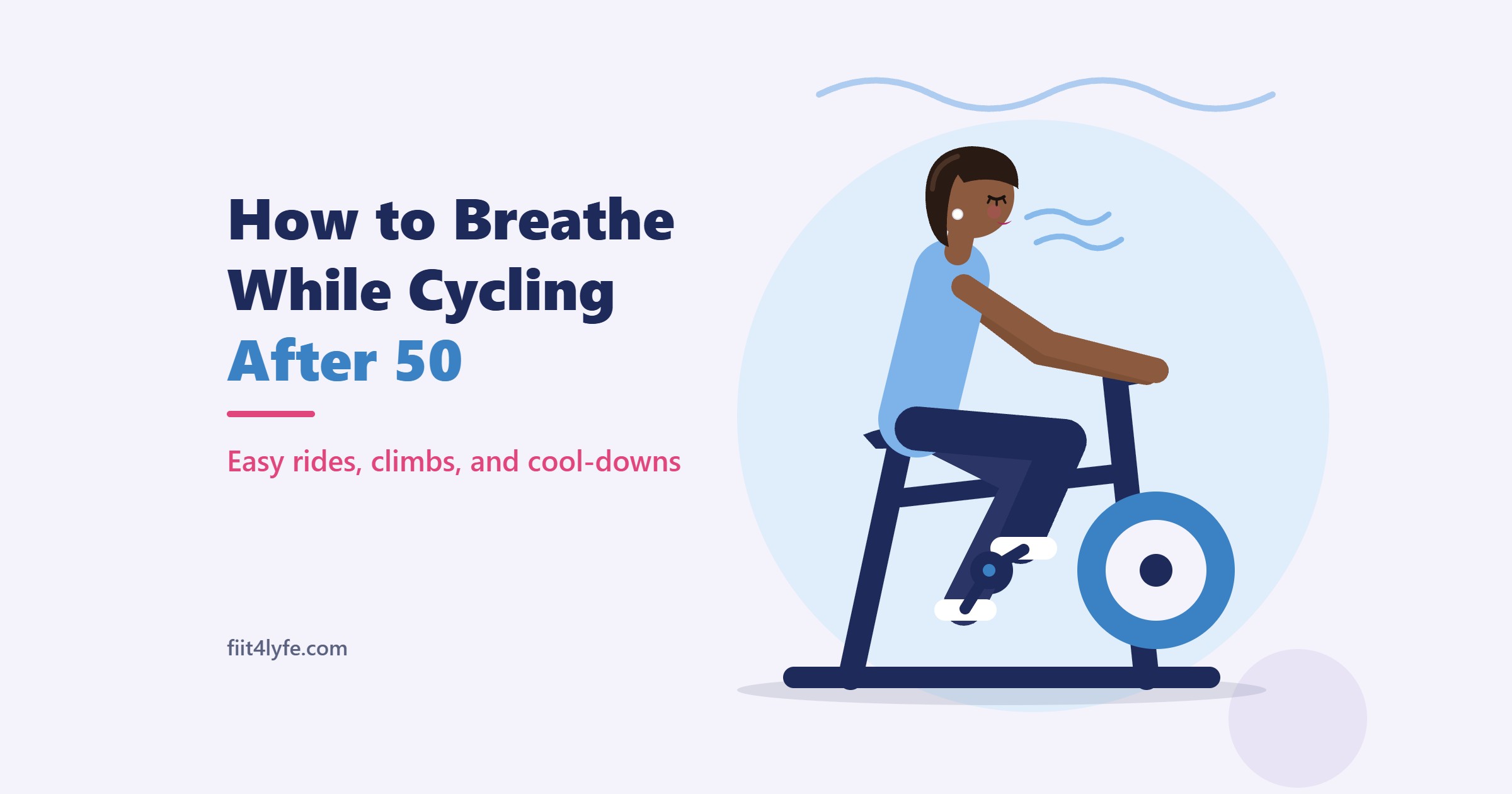
To breathe well while cycling, keep your shoulders relaxed and breathe low into your belly. Let your breathing guide your effort: on most rides you should be able to talk in full sentences, and on hard efforts only a few words. After 50, the most important rule is to never hold your breath when you push, because it can make your blood pressure spike.
Why do I get so out of breath on an exercise bike?
Usually because you’re going harder than you think, especially at the start. Breathing hard is your body asking for more oxygen. Ease the resistance until you can talk again, warm up longer, and build up slowly. If breathlessness comes with chest pain, dizziness, or feels unusual for you, stop and get checked.
Beginners almost always start too fast. Your breathing catches up to your effort a minute or two later, so by the time you feel it, you’ve already gone too hard. A gradual warm-up before you ride fixes most of this.
The good news: this gets easier quickly. As your fitness builds over the first few weeks, you’ll likely notice the same ride feels easier.
Stop riding and call 911 if you feel chest pain or pressure. Stop and get medical help right away for dizziness, faintness, or shortness of breath that’s not normal for you.
How to breathe while cycling: what’s the right way?
Low and relaxed. Let your belly and lower ribs expand as you breathe in, keep your shoulders down and your grip light, and let each breath out fully. Breathe through your nose on easy rides if it’s comfortable, and through your mouth whenever you need more air. There’s no wrong answer when you’re working hard.
Breathing low like this is often called diaphragmatic breathing, or belly breathing. Your diaphragm, the dome-shaped muscle under your lungs, does the work, instead of your neck and shoulders.
Try this 60-second check before your next ride. Sit tall, put one hand on your chest and one on your belly, and breathe in slowly. Your belly hand should move more than your chest hand. Then climb on and keep that same easy, low breath.
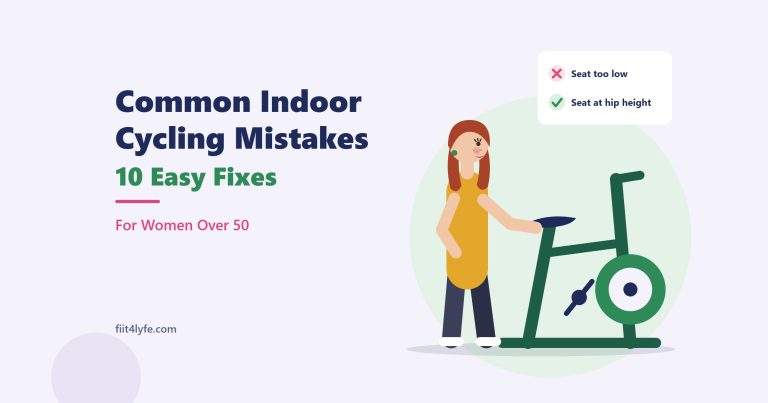
Your bike setup matters too. My ISSA indoor cycling training calls for a light but firm grip and a relaxed upper body. A death grip, hunched shoulders, and locked elbows all make it harder to breathe deeply. My list of common indoor cycling mistakes shows how to fix your posture.
How do you use your breathing to judge how hard you’re riding?
Use the talk test. If you can sing, you’re riding easy. If you can talk in full sentences but not sing, that’s moderate, the effort that counts toward your weekly goal of at least 150 minutes. If you can only say a few words before pausing for a breath, you’re working vigorously. Most rides after 50 should feel moderate.
The CDC uses this simple talk test to describe moderate and vigorous effort, no gadgets needed.
| Effort | What your breathing allows | Use it for |
|---|---|---|
| Easy | You can sing | Warm-ups, cool-downs, recovery days |
| Moderate | You can talk, but not sing | Most of your rides |
| Vigorous | Only a few words at a time | Short intervals, once you have a base |
The talk test is especially useful if you take a beta blocker or another medicine that changes your heart rate, because your heart rate numbers may not tell the whole story. It pairs with the 1 to 10 effort scale in my beginner’s guide.
Why shouldn’t you hold your breath on a hard climb?
Holding your breath while you strain, called the Valsalva maneuver, makes your blood pressure jump. My ISSA indoor cycling training warns that it can be harmful for some people. On climbs, breathe out as you push the pedal down, and keep breathing steadily. If you can’t, lower the resistance.
Most of us do it without noticing. You add resistance, your jaw clenches, and you stop breathing for a few pedal strokes. Three easy fixes:
- Breathe out on the push. Let the air out as you drive the pedal down.
- Count out loud or hum. You can’t hold your breath while you’re making sound.
- Back off the resistance until steady breathing feels natural again.
This matters most if you have high blood pressure or a heart condition. The same rule works for strength training: breathe out as you lift.
Should you match your breathing to your pedal strokes?
You can, but you don’t have to. Some riders like a rhythm, such as breathing in for two pedal strokes and out for two on steady rides. If counting distracts you, skip it. What matters is steady, relaxed breathing and no breath-holding. A rhythm helps most on long steady rides and climbs.
On harder efforts, your breathing will naturally speed up, often to one breath every pedal stroke or two. That’s fine. Let it happen, and keep your shoulders soft.
For more on riding hard safely, see my HIIT plan for women over 50.
What’s the best way to breathe on the cool-down?
Slow it way down. In the last few minutes, pedal easy and breathe in for about 4 counts and out for about 6, roughly six breaths a minute. A longer breath out may help your body settle toward rest mode. Research on regular slow breathing has found it can modestly lower blood pressure over time.
This is how I end every ride. High blood pressure is what got me on a bike in my 40s, so those last two minutes of slow breathing are part of how I look out for my heart. It’s also my favorite part of the ride.
| The Myth | The Precision Standard |
|---|---|
| Hold your breath and power through | Breathe out on the push, every time |
| Gasping means a great workout | Most rides should pass the talk test |
| Only nose breathing counts | Nose when it’s easy, mouth when you need air |
| Breathing is automatic, so ignore it | A relaxed breath means relaxed shoulders and a better ride |
| Stop the second the ride ends | Take 2 minutes of slow breathing to come down |
My 21-Day Fitness Acceleration Planner asks you to pick one or two areas to focus on at a time, and stress management is one of them. So here’s your Daily Win. After today’s ride, keep pedaling easy and take 10 slow breaths: in for 4, out for 6.
Forensic Case File: The breathing habit that nudged blood pressure down
Let’s look at the evidence. Researchers pooled 17 randomized trials of people with high or borderline-high blood pressure. Participants practiced slow breathing, at 10 breaths a minute or slower, for at least 5 minutes, at least 3 days a week. Some used a guiding device, and some did yoga-style breathing.
On average, their systolic pressure, the top number, dropped about 5.6 points. Their diastolic pressure, the bottom number, dropped about 3 points.
Now the honest limits. The studies varied a lot, and the effect was modest. A 2022 review found that device-guided breathing alone did not clearly lower blood pressure, so the evidence is still mixed. Slow breathing is not a replacement for medicine or your doctor’s plan.
Here’s what I take from it. A habit that takes two minutes and feels good may also be kind to your blood pressure. That’s reason enough to end every ride with it.
Bottom line: Breathe low and relaxed while you ride, let the talk test guide your effort, and never hold your breath on a hard push. After 50, finishing each ride with 2 minutes of slow breathing, in for 4 and out for 6, helps your body settle and may support healthier blood pressure over time.
Frequently Asked Questions
Should I breathe through my nose or mouth when cycling?
Either is fine. Nose breathing feels calming on easy rides and warm-ups. As the effort climbs, your body needs more air, so breathing through your mouth, or both, is normal and helpful. Don’t force nose-only breathing on hard efforts.
What is diaphragmatic breathing?
It’s breathing low into your belly, so your diaphragm, the main breathing muscle under your lungs, does most of the work. Your belly and lower ribs expand as you breathe in, and your shoulders stay relaxed. It’s the easiest way to breathe deeply on the bike.
Is it normal to feel out of breath on an exercise bike as a beginner?
Yes, especially in your first few weeks. Lower the resistance, slow down until you can talk, and warm up longer. It usually improves quickly as your fitness builds. Breathlessness with chest pain, dizziness, or that feels unusual for you is different: stop and get checked.
How can I stop holding my breath when I exercise?
Breathe out on the hardest part of each movement, like the push on a climb or the lift on a squat. Counting out loud or humming helps, because you can’t hold your breath while making sound. If you still catch yourself holding it, the effort is too hard, so ease off.
Can breathing exercises lower blood pressure?
Some research suggests regular slow breathing can lower blood pressure a little, about 5 points on the top number on average, though not every review agrees. It’s a helpful habit, not a treatment. Keep following your doctor’s plan, and ask your doctor before relying on breathing exercises for blood pressure.
Do you catch yourself holding your breath on climbs? Tell me in the comments.
New to indoor cycling, or getting back to it? Get my free printable plan, Your First 4 Weeks of Low-Impact Riding, with a bike setup checklist and a ride-by-ride schedule.
For a new low-impact workout idea every week, follow me @FiitTalk on Instagram and TikTok.
I’m a certified fitness professional, not a doctor, and this article is for general education, not medical advice. Please check with your doctor before starting any new exercise program, especially if you have high blood pressure, a heart or lung condition such as asthma or COPD, or take medicine that affects your heart rate.
Sources
- Centers for Disease Control and Prevention. Measuring Physical Activity Intensity.
- Chaddha A, et al. Device and non-device-guided slow breathing to reduce blood pressure: a systematic review and meta-analysis. Complementary Therapies in Medicine, 2019.
- de Freitas Gonçalves KS, et al. Device-guided and non-device-guided slow breathing to reduce blood pressure in patients with hypertension: a systematic review and meta-analysis. Health Science Reports, 2022.
- ISSA. Indoor Cycling course text.
- U.S. Department of Health and Human Services. Physical Activity Guidelines for Americans, 2nd edition, 2018.