How to Start Indoor Cycling Over 50: A Beginner’s Guide for Women
That bike in the corner has had a towel draped over it for three weeks. You walk past it every morning. Today you finally pull the towel off and climb on. Then you realize you have no idea how high the seat should be, how long to ride, or how hard to push.
Good. Asking those questions means you’re about to start the right way.
Here’s how to start indoor cycling over 50 without sore knees, a sore seat, or a first ride so hard you never come back.
To start indoor cycling over 50, set your seat at hip height so your knee keeps a slight bend at the bottom of each pedal stroke, then ride at an easy, conversational pace for 15 to 20 minutes. Ride twice a week for the first month, then build to three or four rides a week. Add two strength sessions each week, and check with your doctor first if you have heart, blood pressure, or joint concerns.
Is indoor cycling good for women over 50?
Yes. Indoor cycling is low impact, so it builds your heart, lungs, and leg strength without pounding your knees, hips, or back. You control the resistance, the weather never cancels your workout, and there’s no traffic to dodge. Once you build to a steady, moderate pace, every ride counts toward the activity your body needs after 50.
The Physical Activity Guidelines for Americans recommend at least 150 minutes a week of moderate activity, plus muscle-strengthening on two or more days. Women over 65 should add balance work too. A bike makes the 150 minutes easy to stack up at home.
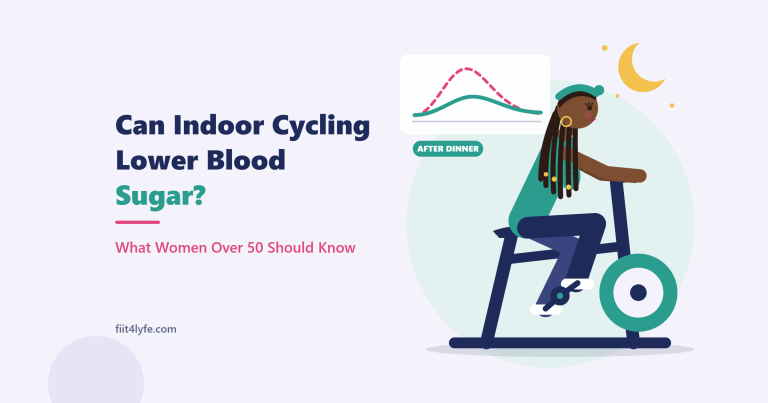
Riding also does more than most women expect. It can help shape your glutes, lower your blood sugar after meals, and later, give you a joint-friendly place to do intervals.
What kind of bike should I start on?
Any stable bike you can adjust to fit your body. An upright or indoor cycling bike feels most like a real bike and lets you stand when you’re ready. A recumbent bike has a chair-style seat with back support and is easy to get on and off. Choose one where the seat and handlebars adjust.
Here’s how the three main types compare:
| Bike type | Best for | Keep in mind |
|---|---|---|
| Indoor cycling (spin) bike | Studio-style rides, standing climbs, classes | Has a weighted flywheel; use the brake to stop |
| Upright exercise bike | Steady home rides, simple controls | Usually seated only |
| Recumbent bike | Back support, easy on and off, getting started gently | Less like a real bike; no standing |
Smart bikes with screens and live classes are great for motivation, but they’re a nice extra, not a requirement. ISSA’s indoor cycling standard looks for a saddle and handlebars that adjust up, down, forward, and back, plus an emergency brake. ISSA also notes that riders with back concerns are often more comfortable with the handlebars set higher. Start there.
How do I set up my bike so my knees and back don’t hurt?
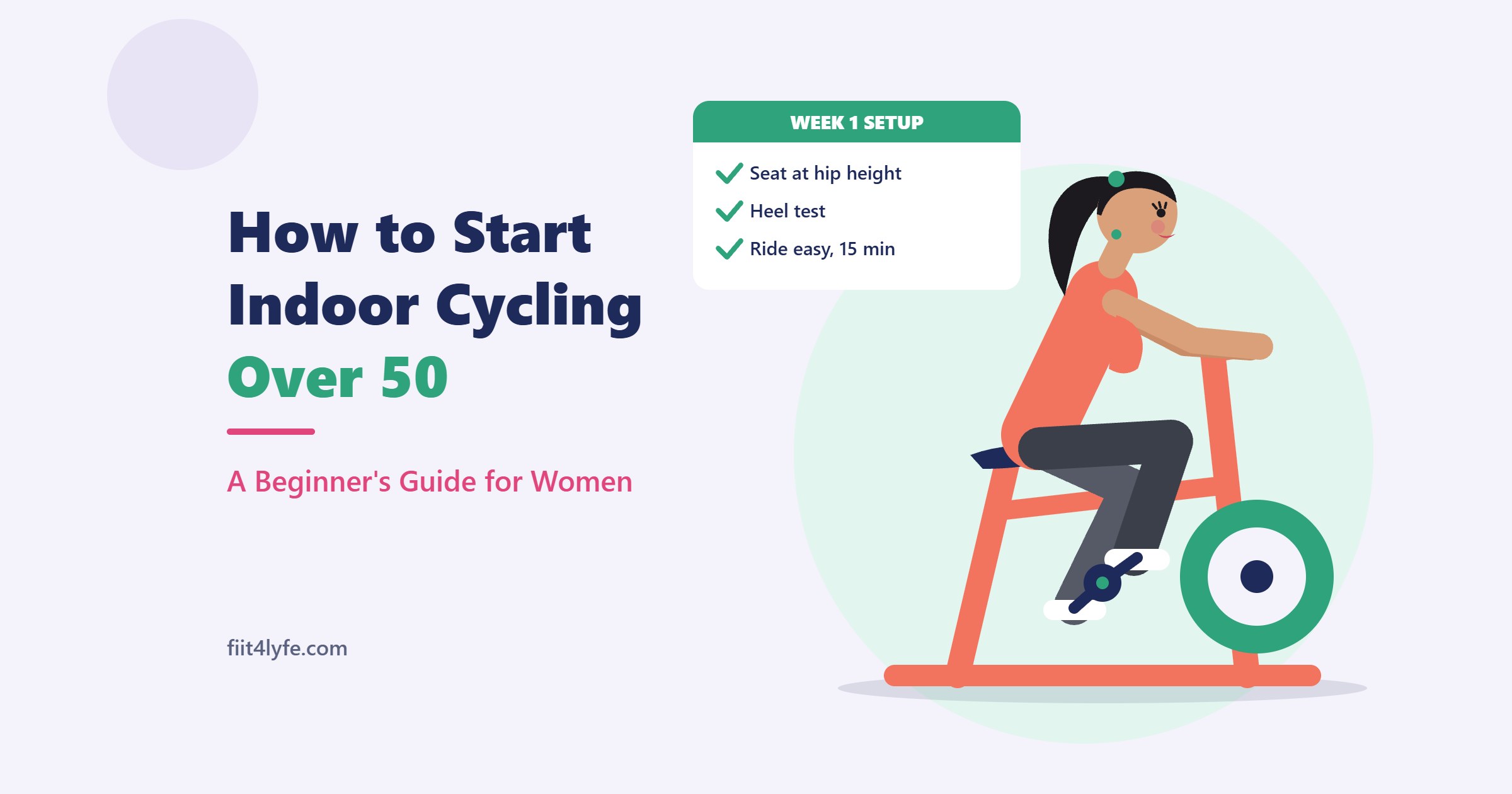
Stand beside the bike and set the seat level with the top of your hip. Sit down, put your heel on the pedal at the bottom of the stroke, and your leg should be straight. When you pedal on the ball of your foot, your knee keeps a soft bend. Raise the handlebars if your back complains.
That soft bend is about 27 to 37 degrees in ISSA’s bike fit standard: bent a little, never locked straight. Then check these:
- The KOPS rule (Knee Over Pedal Spindle). With the pedals level, your front knee should sit right over the center of the pedal. Slide the seat forward or back until it does.
- Seat level. Keep it flat, not tilted up or down.
- Soft elbows. Never lock your arms.
- Safety pins in. Make sure every adjustment pin is fully locked before you ride.
ISSA’s quick check while you pedal: if your hips rock side to side, the seat is too high. If your thigh rises above level at the top of the stroke, it’s too low. ISSA warns that a seat set too low can cause knee pain.
How long and how often should a beginner ride?
Start with 15 to 20 minutes, twice a week, for your first month. In month two, build to three or four rides a week, adding about 5 minutes at a time. Over time, work toward at least 150 minutes of moderate activity each week, plus two days of strength training.
ISSA’s indoor cycling standard notes that two sessions a week may be enough in the first month, with better results from three or four sessions in the weeks after. Always include a warm-up and a cool-down. A little leg soreness after your first rides is normal and usually fades as you keep riding.
How hard should my first rides feel?
Easy enough to talk. On a 1 to 10 effort scale, your first rides should sit around 3 or 4. You’re breathing a little harder, but you can still hold a conversation. That’s Zone 2, the steady, chatty pace that builds your endurance. Save hard intervals until easy rides feel routine.
In ISSA’s training zones, Zone 2 is about 65 to 75 percent of your max heart rate. Heart rate formulas are only estimates, and some blood pressure medicines lower your heart rate, so trust how you feel, and ask your doctor for your target if you take a beta blocker. The most common beginner mistake is going out too fast. Start slower than you think you need to.
By week three, let the pace climb a little, to about 4 or 5: you can talk, but you couldn’t sing. That’s the moderate effort that counts toward your 150 minutes.
Stop riding and get medical help right away if you feel chest pain or pressure, dizziness, or shortness of breath that’s not normal for you.
How to start indoor cycling over 50: what does a 4-week plan look like?
Week 1: two easy 15-minute rides. Week 2: two 20-minute rides. Week 3: two 25-minute rides at a slightly stronger pace. Week 4: two 30-minute rides, with a few one-minute pickups if you feel good. Warm up and cool down for 3 to 5 minutes every time, and add two strength sessions.
| Week | Rides | Minutes per ride | Effort (1 to 10) |
|---|---|---|---|
| 1 | 2 | 15 | 3 to 4 |
| 2 | 2 | 20 | 3 to 4 |
| 3 | 2 | 25 | 4 to 5 |
| 4 | 2 | 30 | 4 to 5, with a few 1-minute pickups to 6 |
In month two, add a third ride, then a fourth, as your body allows.
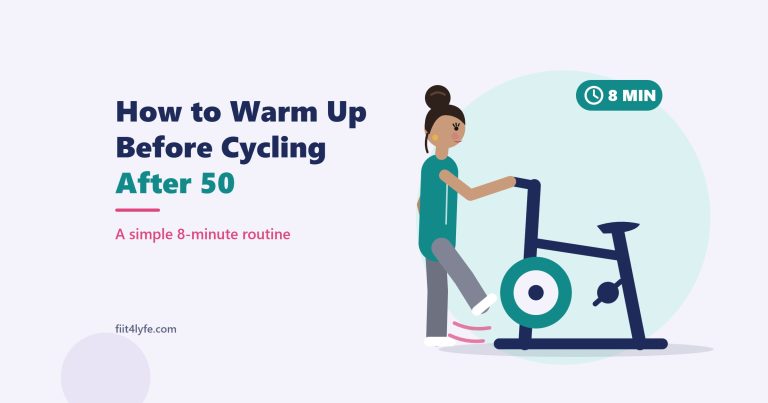
Your strength days should work your legs, hips, back, chest, arms, and core. My 5-minute glute activation routine is a great primer for the lower body, before a ride or a strength session. Add simple balance work too, like standing on one foot while you hold the kitchen counter. Before each ride, use these warm-up exercises.
What should I wear and bring?
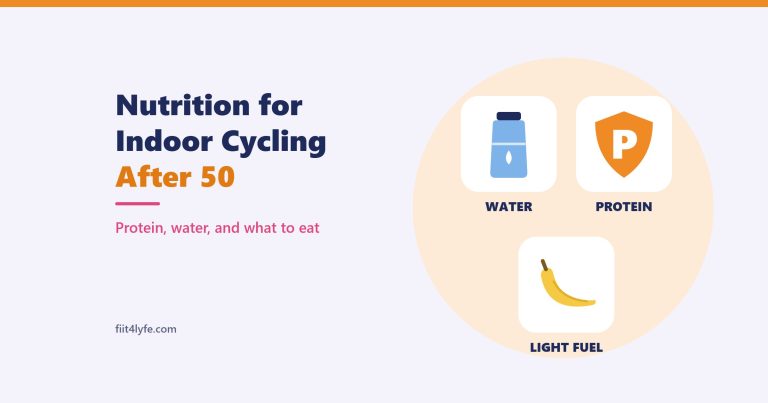
Breathable, fitted clothes, padded cycling shorts if the seat bothers you, and supportive shoes with stiff soles. Keep water within reach and a towel handy, and ride in a cool room with a fan. Padded shorts or a gel seat cover solve most early saddle soreness. Indoor rides get warmer than you’d expect.
One tip from ISSA’s indoor cycling text: don’t wear underwear under padded cycling shorts. It bunches up and rubs. Cycling gloves help if your hands get slippery.
| The Myth | The Precision Standard |
|---|---|
| Go hard from day one | Ride easy enough to talk for the first month |
| Any seat height will do | Seat at hip height, soft knee bend at the bottom |
| More rides, faster results | Two rides a week in month one, then build |
| Soreness means it’s working | Some early soreness is normal; sharp pain means stop and adjust |
| Cardio is enough | Pair your rides with two strength sessions and a little balance work each week |
My 21-Day Fitness Acceleration Planner starts every journey the same way: find your reason “why,” and focus on just one or two areas at a time. So here’s your Daily Win. Before your first ride, write your why in one sentence and tape it to your handlebars. Then log your minutes and how each ride felt. Getting stronger counts as progress.
Forensic Case File: My first indoor cycling class
My very first indoor cycling class was at LA Fitness. The instructor walked in and announced she was nine months pregnant. I remember thinking, how bad could this be?
She worked me out so hard I almost didn’t come back.
That class taught me two things. First, a bike can be a total-body workout. I felt it in my legs, my core, my arms, and my lungs. Second, I started too hard. I had no idea how my bike should be set up, and nobody told me I could ride at my own pace.
I didn’t become a regular rider until I bought my MYX bike and could ride at home on my own schedule. That’s when it stuck.
So learn from me. You don’t have to keep up with the instructor, or anyone else. Set up your bike, ride at your own pace, and come back next time.
Bottom line: To start indoor cycling over 50, set your seat at hip height with a soft knee bend, ride at a conversational pace for 15 to 20 minutes twice a week, and build to three or four moderate rides plus two strength sessions a week after the first month.
Frequently Asked Questions
How long should a 50-year-old woman ride a stationary bike?
Start with 15 to 20 minutes at an easy pace. As that feels comfortable, add about 5 minutes at a time. Work up to about 30 minutes, five days a week, or 40 to 50 minutes, three or four days a week. Either way adds up to the 150 weekly minutes U.S. guidelines recommend.
Is a recumbent bike or an upright bike better after 50?
Neither is better for everyone. A recumbent bike has a backrest and is easier to get on and off, so many women find it a comfortable place to start. An upright or indoor cycling bike feels more like a real bike and lets you stand. Ask your doctor if back pain or balance is a concern.
Is it OK to ride an exercise bike every day?
Easy rides most days are fine once your body has adapted. In your first month, stick to two rides a week with rest days in between. Mix in strength training, and take an extra day off if your legs or seat are sore.
Why does my seat hurt on an exercise bike?
Some soreness is normal in the first few rides. Check that your seat is level and at the right height, then try padded cycling shorts or a gel seat cover. If the soreness doesn’t ease after a couple of weeks, adjust the fit or ask a bike fitter.
Can I start indoor cycling if I have bad knees?
Often, yes. Cycling is low impact, and the right seat height helps protect your knees. A seat set too low can cause knee pain. Start with light resistance and short rides, and check with your doctor or physical therapist first.
For more help in your first month, read the most common beginner mistakes, how to breathe on the bike, easy low-impact workouts, and how to stay motivated and track your progress.
What’s holding you back from your first ride: the setup, the time, or the motivation? Tell me in the comments.
New to indoor cycling, or getting back to it? Get my free printable plan, Your First 4 Weeks of Low-Impact Riding, with a bike setup checklist and a ride-by-ride schedule.
For a new low-impact workout idea every week, follow me @FiitTalk on Instagram and TikTok.
I’m a certified fitness professional, not a doctor, and this article is for general education, not medical advice. Please check with your doctor before starting any new exercise program, especially if you have heart disease, high blood pressure, joint problems, or balance concerns.
Sources
- U.S. Department of Health and Human Services. Physical Activity Guidelines for Americans, 2nd edition, 2018.
- ISSA. Indoor Cycling course text (bike fit, training zones, class design, apparel).
- American Heart Association. How do beta blocker drugs affect exercise?